Ever feel like academic publishing guidelines were written by someone who failed their communication degree? I’ve spent more time deciphering journal requirements than I care to admit.
Choosing the right journal is like online dating for your research. Get it wrong, and you’re facing rejection after rejection. The secret lies in understanding what editors really want.
From mysterious formatting rules to reference styles that change more often than Twitter’s CEO, we’ll break down the essential submission checklist that actually matters. Because let’s be honest – nobody should navigate this maze alone.
This isn’t just about following rules. It’s about speaking the language of academic publishing while keeping your sanity intact.
Checking All Sections
Ever tried building IKEA furniture without checking all the pieces first? That’s what submitting research feels like when you skip section verification. I’ve seen more careers fall apart over formatting than over the actual research.
Your title needs to work harder than a Netflix recommendation algorithm. It’s not just a label – it’s your first impression, your SEO hook, and your content promise all rolled into one.
Author affiliations matter more than your pedigree. Journals want institutional credibility, not just big names. Get those details right or risk looking like an academic ghost.
Grammar mistakes are the academic equivalent of showing up to the Met Gala in sweatpants. They don’t just look bad – they undermine your entire intellectual credibility.
Tables and figures have wandering tendencies worse than a cat in a new apartment. Anchor them properly with clear labels and references, or watch reviewers get lost in your data.
Cohesiveness isn’t just nice-to-have – it’s your manuscript’s structural integrity. Each section should flow into the next like a well-choreographed Broadway musical.
Citation protocols separate the professionals from the amateurs. Nothing says “I didn’t do my homework” like inconsistent referencing. It’s the academic version of showing up to a black-tie event in jeans.
Conflict-of-interest statements require more transparency than a politician’s campaign promises. Be brutally honest – journals have seen it all, but they hate surprises.
Ethical compliance isn’t just checkboxes. It’s your academic honor system made visible. Treat it like your grandmother’s fine china – with extreme care and respect.
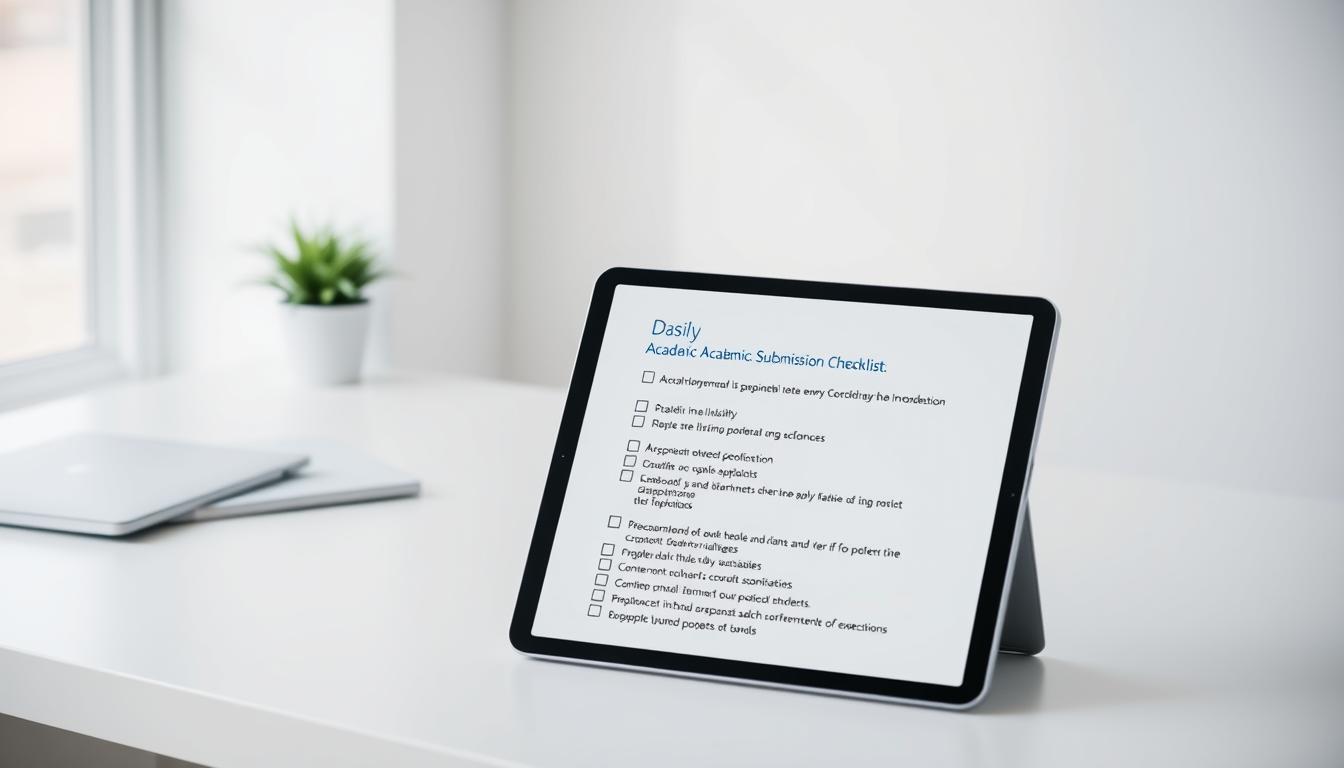
The submission checklist exists for reasons beyond bureaucratic torture. It’s your quality assurance system, your safety net, and your competitive edge all in one document.
| Section Element | Common Mistakes | Pro Tip | Impact on Review |
|---|---|---|---|
| Title & Abstract | Too vague or overly technical | Test with non-specialists | First impression determinant |
| Author Information | Missing ORCID IDs or inconsistent affiliations | Triple-check all correspondences | Credibility assessment |
| Figures & Tables | Poor resolution or misplaced references | Create standalone captions | Data comprehension |
| Citations | Format inconsistencies or outdated references | Use reference manager software | Academic rigor evaluation |
| Ethical Statements | Boilerplate language or missing disclosures | Customize for each submission | Trust factor multiplier |
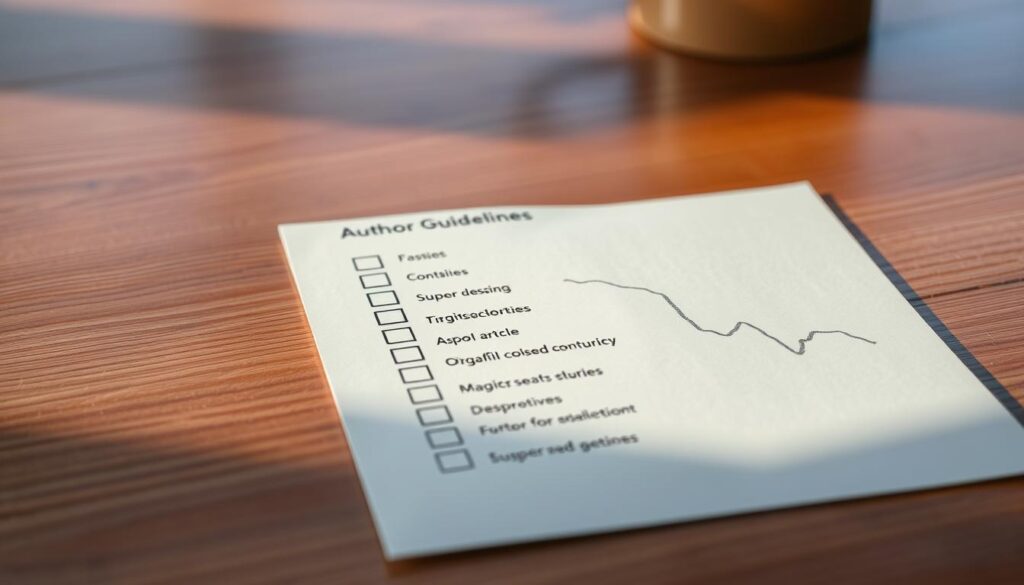
Remember: peer review is academic Darwinism. The best science doesn’t always win – the best-prepared science does. Your author guidelines adherence might be the difference between acceptance and that soul-crushing “revise and resubmit.”
Think of section checking as your manuscript’s quality control department. Skip it, and you’re basically crossing your fingers and hoping the academic gods are feeling generous. They usually aren’t.
Proofreading and Review
Let’s face it, your first draft might have more mistakes than a politician’s promises. I’ve seen papers that made me think the author typed with boxing gloves. But, journals don’t tolerate sloppy writing. They quickly reject it, just like swiping left on Tinder.
Proofreading requirements in academic publishing are about showing you’re credible. Every typo says “I don’t care enough.” And citation errors scream “I didn’t do my homework.” It’s like wearing sweatpants to a black-tie event.
Don’t rely on Microsoft Word’s grammar suggestions. They’re as reliable as Seattle’s weather forecast. They might catch “teh” instead of “the,” but they miss “pubic” instead of “public” policy. Yes, this mistake happens more than you think.
The three-pass system helps separate good manuscripts from great ones:
- Content pass: Check if your argument makes sense – does it hold water or leak?
- Technical pass: Look for grammar, spelling, and punctuation mistakes – the boring but essential stuff
- Consistency pass: Check formatting, citation style, and terminology – because mixing styles is a big no-no
Factual accuracy is critical for your academic reputation. I’ve seen careers damaged by misquoted sources or statistical errors. These mistakes are embarrassing for anyone, even a freshman.
The debate over US/UK English is significant. Choose one and stick with it – mixing them is like wearing mismatched shoes to an interview.
| Proofreading Approach | Catch Rate | Time Investment | Suitable For |
|---|---|---|---|
| Self-Proofreading | 60-70% | 2-4 hours | Minor revisions |
| Peer Review | 75-85% | 1-2 days | Most academic papers |
| Professional Editing | 95-99% | 3-5 days | Journal submissions |
| Multiple Cycle System | 99%+ | 5-7 days | High-stakes publications |
Citation completeness is important. It shows you’ve done your homework. Missing references are like serving a meal without mentioning the recipe source – it’s a disappointment.
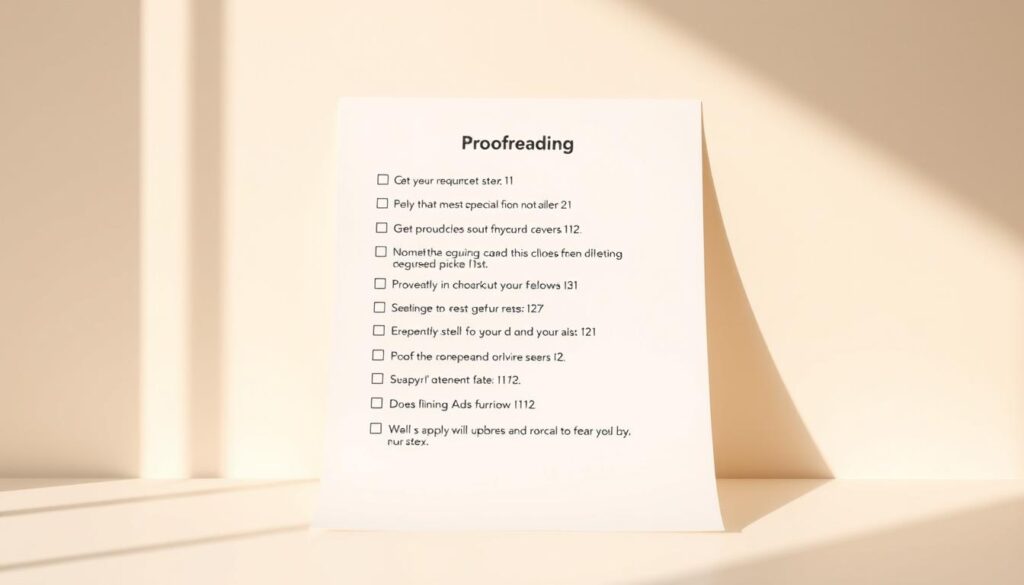
Use a comprehensive proofreading checklist to meet all requirements. It’s like a GPS for your manuscript – it won’t drive for you, but it keeps you on track.
Remember, your manuscript’s quality isn’t just about what you say, but how you say it. Meeting these proofreading requirements can make all the difference. It’s what separates being taken seriously from being ignored.
Required Documents
Academic publishing is more complex than a casino heist. I’ve seen many submissions fail due to missing paperwork. Your submission checklist is like a passport for your research. Without all the stamps, you won’t pass.
Each document has a specific role. Missing one is like showing up to a fancy event without pants. It’s embarrassing and won’t get you through.
Your cover letter must persuade like a lawyer and summarize like a Netflix trailer. It should include:
- Why your research is important
- How you’ve addressed previous reviewer concerns
- Why this journal is the best fit for your work
Ethical Compliance: Your Moral Compass
These declarations need more honesty than a whistleblower. You’re promising you didn’t fake your data or harm your subjects.
Conflict-of-Interest: Your Financial Disclosure
This is like your academic prenup. You must list any financial ties that could look bad. That includes funding from companies or patents.
| Document Type | Purpose | Common Mistakes | Pro Tip |
|---|---|---|---|
| Cover Letter | Persuade editors | Too generic | Tailor to journal’s recent publications |
| Ethical Statement | Verify integrity | Missing IRB approval number | Keep approval documents handy |
| Conflict Disclosure | Transparency | “None” when there are some | When in doubt, disclose |
| Author Information | Credit assignment | Inconsistent formatting | Use ORCID IDs for all authors |
| Copyright Forms | Legal protection | Missing signatures | Digital signatures usually accepted |
Author Information: Your Research Team Roster
This document needs to be as complete as an FBI background check. Every author’s role, affiliation, and contact info must be correct. Incomplete information can cause problems.
Supplementary Materials: Your Bonus Features
These are like the DVD extras of academic publishing. They include raw data, extra analyses, and more. They support your main work without getting in the way.
Your submission checklist should include funding details. Grant numbers, funding agencies, and project IDs are all important. Get them wrong, and you might have to return the money.
Copyright clearances are like a fine print contract. You need permission for every image and questionnaire you use. It’s a lot of paperwork.
Make sure your contact information is correct. Most rejection notices go to the corresponding author’s email. Use a current email address, not an old one.
A complete submission checklist shows you’re a professional. It’s the difference between success and failure.
Prepare your documents like a pre-flight checklist. Missing something might not cause a big problem, but it will delay your publication.
Submission Portal Walkthrough
You’ve worked hard on your manuscript and gathered all the necessary documents. Now, you face the digital challenge of submission portals. These systems can test your patience like a Zen koan.
The Taylor & Francis Online submission system is the modern standard. It guides you through uploading your work, adding metadata, and confirming author guidelines. Choosing between PDF or DOCX is a philosophical decision here.
Some journals prefer email submissions. This isn’t due to fear of technology but the design of their editorial workflow. Nature’s email submission process is for specific article types. Always check the author guidelines for the preferred method.
Dedicated portals like Elsevier’s EVISE or Springer Nature’s Editorial Manager offer a structured experience. They act as digital bouncers, checking your credentials before allowing access to journal editors.
Before hitting the submit button, do a final check. Make sure your files are compatible, your word count is correct, and your figures are in the right resolution. This step is more important than you might think.
When you click that submit button, you feel both relief and anxiety. You’ve conquered the publishing mountains. Now, your manuscript is ready for peer review.