government copyright role in NYT v. OpenAI

The government copyright role in NYT v. OpenAI shows authors why fair use, licensing records, and contract clarity need review.
The government copyright role in NYT v. OpenAI shows authors why fair use, licensing records, and contract clarity need review.

Collaborative publishing now asks authors to clarify rights, AI use, credits, and schedules while union activity reshapes book teams.

Publishing unionization is reshaping how authors plan collaborative books, from staffing questions to rights, timelines, and clearer handoffs.
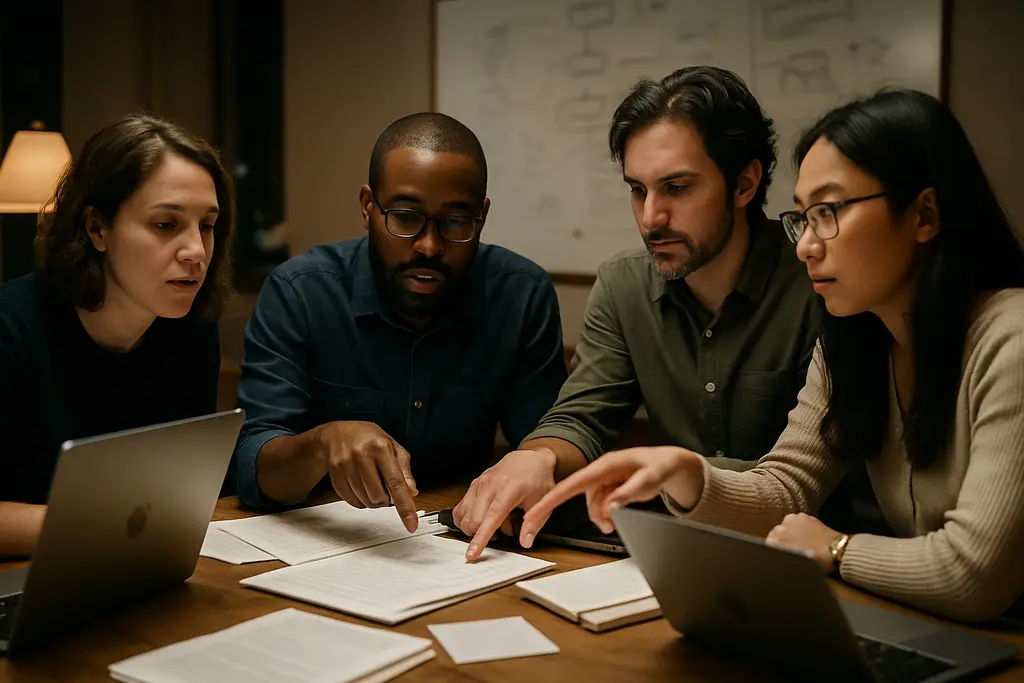
AI use in publishing can support collaborative books when teams set rights, disclosure, review, and workflow rules before drafting begins.

AI Disclosure Requirements now affect collaborative manuscripts. Learn what teams should record, assign, and check before journal submission.

Compare hybrid publishing models for nonfiction authors using verified survey data, rights questions, cost checks, and launch planning.

Adult fiction revenue rose in 2025, but formats shifted. Learn practical takeaways for rights, formats, and positioning without hype.

Publishing unionization can shape author treatment through staffing stability, rights clarity, and contract questions without promising outcomes.

AI Publishing Rights now require clearer contracts, permissions, and records after Anthropic’s book copyright settlement for authors.

Writing a book for mechanical engineers, immunologists, and pure mathematicians is like hosting a dinner party for different animals. It’s challenging. So, why try to connect these fields? It’s not just about showing off. In today’s world, we need to connect different fields. The best books don’t just share findings. They create a bridge between … Read moreIntegrating Methods and Data Across Engineering, Medicine, and Pure Sciences in Book-Length Works