
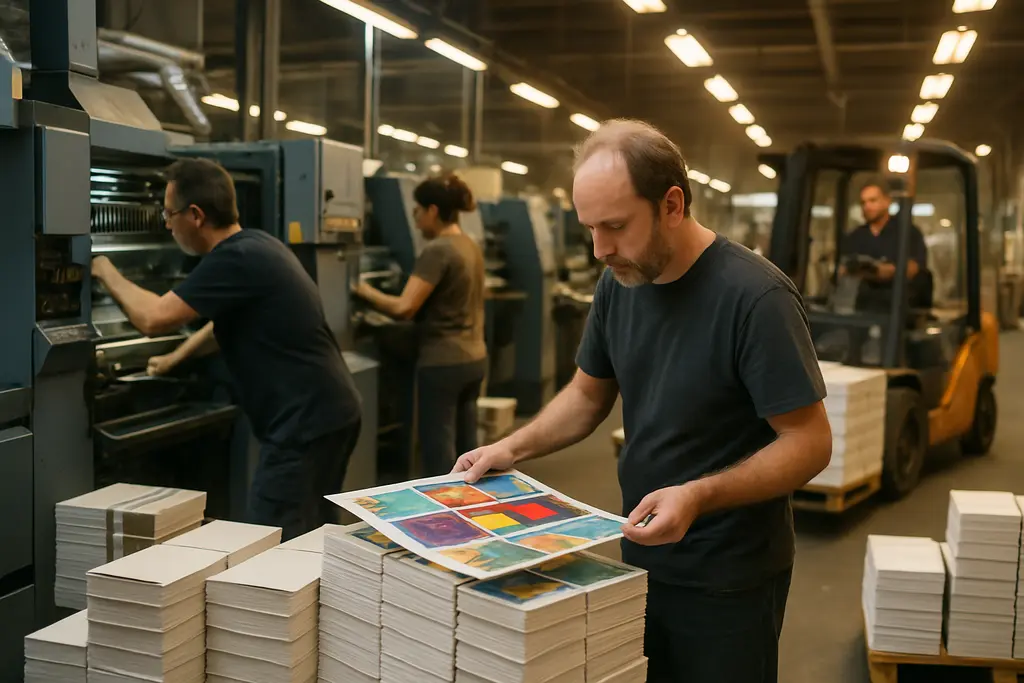
Book manufacturing trends now affect promotion earlier than many authors expect. A campaign can be well written and still lose force if print timing, inventory choices, format decisions, and retailer availability do not line up. The Book Manufacturers’ Institute and related reporting point to a practical shift: publishers and manufacturers are paying closer attention to shorter runs, digital production, print-on-demand, artificial intelligence, and lower inventory exposure.
For authors, the value is not in trying to act like a printer. The value is in asking better questions before publicity begins. If a publisher plans to print fewer copies first, add stock later, or use more flexible production, that can change when review copies exist, how quickly books can move toward demand, and how promotional claims should be framed. It can also change the risk profile of a launch, especially for interdisciplinary titles whose readership may be real but harder to forecast.
Why Manufacturing Now Shapes Promotion
AI And Production Capacity
In 2026 reporting on the Book Manufacturers’ Institute forecast, Publishers Weekly reported that 85% of surveyed printers said AI is critical for staying competitive, while 83% said it had opened new business opportunities. The same coverage identified increased production efficiency, improved quality and consistency, and freeing staff from repetitive tasks as leading benefits cited by respondents Publishers Weekly coverage.
Those figures do not mean every author will see faster schedules or lower costs. They do suggest that manufacturing partners are testing tools that may affect estimating, workflow, quality checks, scheduling, and production management. Promotion depends on those systems more than it may appear from the outside. A delayed print schedule can weaken event planning, review timing, academic conference sales, course adoption efforts, and coordinated media outreach.
How Book Manufacturing Trends Change Promotion Timing
Promotion used to be discussed as if it sat mostly after editing and design. That separation is less useful now. If a title depends on short-run printing or print-on-demand, the campaign may be built around staged demand rather than a large first shipment. If the launch depends on a premium format, the production calendar may need more protection before public dates are promised. If a publisher wants lower stock risk, early promotion may be used to test demand signals before larger commitments are made.
This matters for scholarly, professional, and cross-disciplinary books. These titles often reach readers through libraries, specialist newsletters, course lists, conferences, podcasts, nonprofit networks, and institutional buyers. The audience may not act at the same speed as trade fiction buyers. A slower but steadier demand pattern can fit shorter runs, but only if the publisher, author, and marketing team understand how the book will reach readers.
Book Manufacturing Trends Behind Leaner Launches
Shorter Runs And Print-On-Demand
The Book Manufacturers’ Institute announced on April 8, 2025, that it had published its 2025 State of the Book Industry Report with NAPCO Research. According to BMI’s announcement, the report addressed changing publisher demand, including growing interest in print-on-demand and shorter production lead times BMI report announcement.
These book manufacturing trends are tightly connected to promotion and impact. A publisher that uses shorter runs may be trying to avoid tying up money and warehouse space in books that may not move. A publisher using print-on-demand may be trying to keep a title available without guessing too high on demand. These choices can support a more careful release plan, but they also require clear communication about availability, timing, and format.
Inventory Risk And Reader Signals
A leaner print plan should not be confused with a weak commitment to a book. It may reflect caution after earlier supply and inventory disruption. It may also reflect a more exact approach to matching copies with demand. For authors, the practical issue is whether promotion has a working path to fulfillment. If a newsletter mention, podcast interview, classroom recommendation, or conference appearance sends readers to buy the book, the sales route should be ready.
| Manufacturing Shift | Promotion Effect | Author Question |
|---|---|---|
| Shorter initial runs | Less excess stock, but less room for surprise demand | How will reprints or replenishment be handled? |
| Print-on-demand | Availability can continue after launch | Which formats will be available through this route? |
| Shorter lead times | Campaign dates may be adjusted closer to demand | Which dates are fixed and which are flexible? |
| Digital production | Smaller batches may become more practical | Will review copies and finished copies follow the same schedule? |
Author Questions Before A Promotional Push
Rights, Format, And Schedule
An author should not treat manufacturing as a back-office concern. It belongs in the same conversation as format strategy, rights, marketing, and sales channels. This is especially true for books with more than one possible market: academic readers, general nonfiction audiences, professional practitioners, museums, faith communities, regional groups, or specialist clubs. For readers who study how editorial niches build audiences, visiting Old Norse News offers related insights in the same network, emphasizing that production choices should support the audience path rather than sit apart from it.
Authors should also be careful not to overstate what a manufacturing plan can deliver. Faster turnaround does not guarantee stronger reviews, more bookstore placement, course adoption, or higher sales. A lower-risk print model can protect resources, but it does not replace clear positioning, accurate metadata, credible outreach, and realistic timing.
What To Coordinate With The Publisher
Before a major announcement, authors can ask practical questions that keep promotion grounded:
- Which edition is being promoted first: hardcover, paperback, ebook, audiobook, or another format?
- Will finished copies, advance copies, or digital review files be ready for outreach?
- How will the publisher respond if demand is higher or lower than expected?
- Are retailer listings, metadata, price, publication date, and author information stable?
- Who decides whether a reprint, print-on-demand route, or format change is needed?
- Which rights are included in the agreement, and which uses require separate permission?
These questions are not a substitute for legal advice on a contract. They are planning prompts. A contract may define rights, formats, territories, royalties, permissions, and approval processes. A production plan should fit within that agreement, not run ahead of it. Authors who work across disciplines should be especially clear about excerpt use, images, course materials, translations, and institutional distribution.
Promotion Impact For Scholarly And Trade Authors

Precision Over Noise
The most useful lesson from recent reporting is that impact may depend less on louder promotion and more on better sequencing. A book aimed at a narrow but serious readership does not always need a large first print run. It may need accurate audience identification, review timing, library and institutional outreach, clear metadata, and a fulfillment plan that can keep pace with demand.
For a university press title, that might mean linking conference promotion with availability for instructors and librarians. For a professional book, it might mean timing outreach around association calendars. For a trade nonfiction title with scholarly roots, it might mean protecting the production schedule so media outreach does not begin before the book can be ordered reliably. Book manufacturing trends affect each of these choices because production and promotion now meet much earlier in the process.
What Authors Should Avoid Claiming
Authors should avoid using manufacturing changes as proof of outcomes that have not happened. A digital print strategy does not prove that a title will sell through. AI-supported manufacturing processes do not prove that a book will be produced without delays. Print-on-demand does not prove that every retailer will stock a physical copy. The safer and more useful claim is narrower: production flexibility can help publishers respond to demand with less reliance on large speculative inventory.
That distinction protects trust. Readers, booksellers, librarians, reviewers, and institutional buyers respond better to clear availability information than to inflated claims. Authors can say where the book is available, which format is being promoted, what publication date applies, and how the book serves its intended readers. They should not promise bestseller status, guaranteed adoption, or unsupported impact.
Book Manufacturing Trends And Author Impact
Seen this way, book manufacturing trends are not a side issue for authors. They influence how a book moves from files to finished copies, how much stock a publisher is willing to carry, how quickly a title can respond to demand, and how confidently a marketing team can set dates. The BMI reporting points toward a more careful model: lower inventory exposure, shorter production timing where possible, selective use of digital production, and interest in tools that may improve efficiency.
For authors, the practical response is steady preparation. Ask for the production calendar. Confirm which formats will be ready for which audiences. Make sure metadata is accurate before publicity sends readers to retailers. Coordinate review outreach with actual copy availability. Keep rights questions separate from promotional enthusiasm. Build the campaign around what the publishing team can support, not around assumptions from a different type of book.
Promotion has always depended on timing. The current industry signals make that connection easier to see. A thoughtful author does not need to manage the pressroom, but does need to understand how manufacturing choices shape reader access. That understanding can make a campaign more honest, better timed, and more useful to the communities the book is meant to reach.