

AI Publishing Clauses now sit close to the center of many author contract conversations. For emerging writers, the issue is not only whether artificial intelligence appears in a manuscript. The practical question is broader: who may use the author’s work, for what purpose, under whose permission, and with what disclosure duties attached?
I write about this as an author advocate, not as a lawyer. Contract language should be reviewed with an agent, attorney, or qualified adviser before signing. Still, authors benefit from knowing the editorial and promotional process well enough to ask clear questions. A clause that looks technical can affect editing, audiobook production, translation, marketing copy, subsidiary rights, and the author’s own creative process.
Why AI Publishing Clauses Now Deserve Early Review
On April 29, 2026, the Authors Guild released a refreshed suite of AI-related model contract clauses covering AI training, AI translations and audiobook narration, subsidiary rights, and an author’s own use of AI. The Guild described the materials as a menu of clauses that authors may consider for new or existing agreements, according to the Authors Guild update.
AI Publishing Clauses And The Editorial Line
The editorial process is built on trust: the author delivers a work, the publisher edits and produces it, and both sides represent the finished book honestly to readers and trade partners. AI tools can blur that line if the contract does not define permitted and prohibited uses. A clause may address whether AI-generated text can appear in the manuscript, whether the author must disclose such use, and whether the publisher may ask the author to use AI during drafting or revision.
The Authors Guild’s April 29, 2026 materials include a sample approach requiring disclosure of AI-generated text and limiting that use to a de minimis amount. The research also states that authors cannot be forced to use AI in their writing process. That matters because editorial collaboration should preserve author agency. A publisher can request revisions; a contract should make clear whether a machine-generated rewrite, summary, or edit is outside the agreed process.
Questions To Ask Before Drafting Starts
Authors should raise these points before the manuscript, proposal, or contract is treated as settled. Waiting until copyedits or marketing copy are underway can make the discussion harder. A practical set of questions includes:
- Does the contract define AI-generated text, AI-assisted text, and ordinary spelling or grammar tools?
- Must the author disclose every AI tool used, or only AI-generated material included in the work?
- Can the publisher require the author to use AI during drafting, editing, translation, or promotion?
- Who approves any AI-related use of the manuscript, cover material, narration, or translation?
- What remedy applies if either side breaches the AI terms?
Rights, Consent, And AI Training Terms
Treat AI Publishing Clauses as rights clauses, not as side notes. Traditional publishing agreements already divide print, ebook, audio, translation, film, merchandising, and other subsidiary rights. AI training and AI-generated adaptations should not be swept casually into broad language unless the author understands the grant.
Separate AI Rights From Standard Publishing Rights
On May 27, 2026, the Australian Society of Authors announced updated model contracts for trade authors and illustrators that included generative AI clauses for the first time. The ASA said those provisions require publishers to obtain the creator’s consent before using works to develop, train, or fine-tune AI tools, as described in the ASA model contracts notice.
That principle is useful beyond Australia because it gives authors a plain way to think about the issue: permission for publication is not automatically permission for training. If a publisher wants a separate AI-related license, the author can ask for a separate description of the use, term, territory, compensation, approval process, and withdrawal or review point. Those are business questions, and they should be answered in writing.
Uploads, Vendors, And Written Permission
Authors should also ask how manuscripts and personal data move through the production chain. A publisher may use outside vendors for editing systems, design work, marketing support, audiobook production, or translation services. The contract can address whether the publisher or vendor may upload manuscript files into consumer-facing AI tools, internal systems, or third-party platforms.
The safest practical habit is to ask for permission language that is specific rather than implied. If a manuscript may be used for summaries, pitch letters, catalog copy, training, fine-tuning, translation drafts, or narration prototypes, each use should be named. Broad phrases such as “all technologies now known or later developed” deserve careful review because they may reach beyond what the author expects.
Disclosure, Warranties, And Author Records
The value of AI Publishing Clauses depends partly on definitions. A disclosure duty that is too vague can create anxiety for authors who used ordinary software support, grammar checks, research organization, or brainstorming tools. A warranty that is too broad can shift risk to the author without giving a clear standard to meet.
Define What Counts As AI Use
Authors can ask the contract to distinguish between generated expression and assistive workflow. For example, a publisher may reasonably want to know if passages of the final manuscript were generated by AI. That is different from asking whether the author used a calendar tool, transcription tool, grammar checker, or search feature at any stage. The agreement should say what must be disclosed and when.
Warranties also need attention. A warranty is a promise in the contract. If it states that no material portion of the work was generated by AI, the author should understand what “material portion” means, how prior consent works, and what happens if a dispute later arises. This is where professional advice is especially valuable, because warranty and indemnity provisions can carry serious consequences.
Keep A Practical File
Authors do not need to turn their creative practice into a courtroom archive. They should, however, keep basic records that match the promises they make. Save drafts, editorial correspondence, permissions, AI disclosure notes, and approvals. If the author used a permitted tool, record the tool, purpose, approximate date, and whether any generated text entered the manuscript.
A clear file helps the author answer publisher questions without relying on memory. It also supports a healthier editorial relationship. Editors and publicists can do better work when the rights and disclosure status of a book is not uncertain.
Promotion, Audio, Translation, And Subsidiary Rights
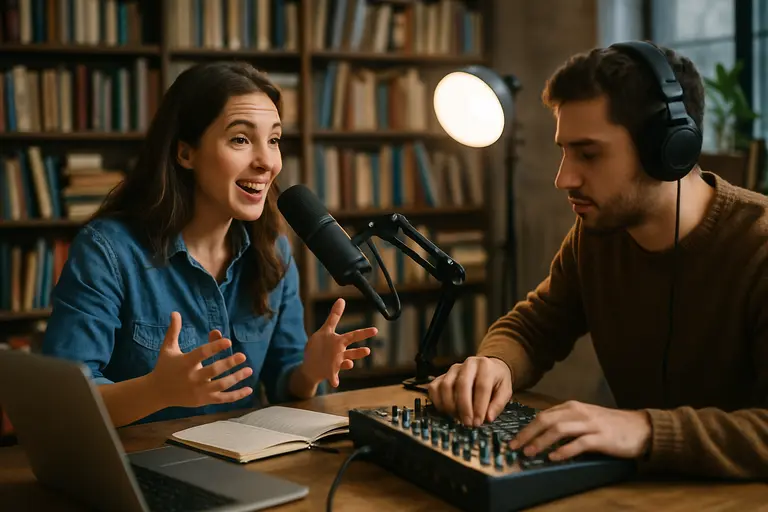
AI contract terms are not limited to the manuscript. Promotion is part of the publishing process, and promotional work often uses summaries, excerpts, author bios, review materials, catalog descriptions, and sales copy. Authors should ask whether those materials may be drafted, edited, or processed by AI systems.
Marketing Copy And Summaries
Marketing teams need efficient tools, but efficiency does not remove consent concerns. If a publisher uses AI to summarize a manuscript or create promotional copy, the author should know whether the text was uploaded to a system that can retain or train on the input. The contract or production policy can require written permission for certain uploads and can set boundaries around manuscript confidentiality.
For writers comparing clauses, a related practical resource on AI publishing contract negotiation may help frame questions before a meeting with an agent or publisher. For broader publishing and arts-adjacent reading from the same network, see Wakefield Rep.
Translation And Narration Uses
Translation and audiobook narration raise separate concerns. A contract may grant translation or audio rights, but that does not automatically answer whether AI translation tools or synthetic narration may be used. If the author expects human translation, human narration, or specific approval rights, the contract should say so.
Subsidiary rights clauses should also explain who controls AI-related opportunities, how offers are evaluated, and whether the author can approve or reject uses connected to training, voice simulation, translation drafts, or derivative formats. The point is not to block every new tool. The point is to prevent surprise.
AI Publishing Clauses For Author Decisions
AI Publishing Clauses are now part of the author’s practical checklist. Before signing, authors should read them alongside the grant of rights, delivery requirements, warranties, indemnities, editorial approval provisions, audiobook terms, translation language, and marketing permissions.
A sensible review process starts with plain questions: What rights am I granting? What uses require my consent? What must I disclose? What promises am I making? What can the publisher do with my manuscript files? What happens if the publisher wants to license my work for AI training or use AI in production?
Authors do not need to master every technical term to protect their position. They need enough understanding to slow down, ask precise questions, and seek qualified advice before agreeing to language that affects creative control, compensation, reputation, and future rights. Clear clauses support clearer publishing relationships, and clear publishing relationships give the book a better chance to move through editing, production, and promotion without avoidable conflict.