
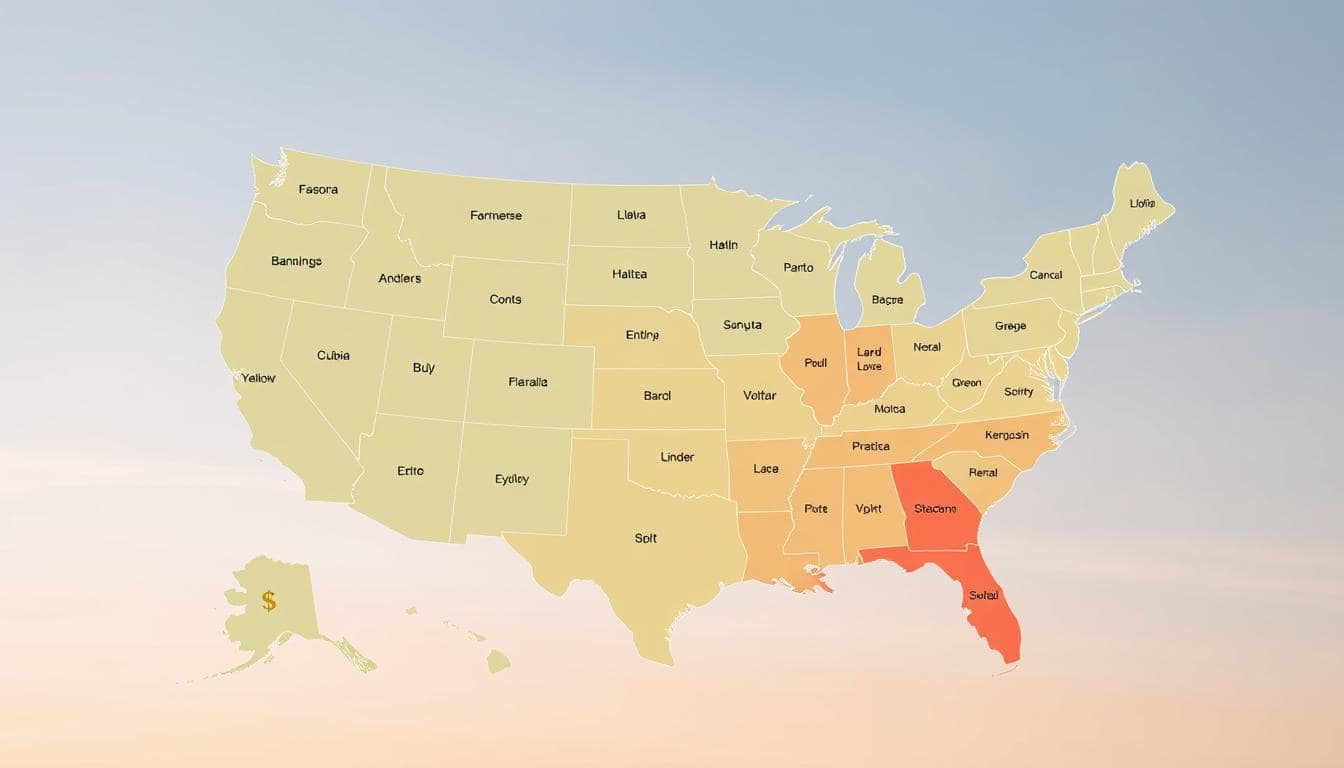
Let’s start with a confession. Trying to navigate American finance is like playing a strategy game. Every territory has its own rulebook. You think moving your money is simple? Think again.
It’s a dance with fifty different choreographers, each with veto power over your next financial step. Welcome to our fragmented banking landscape. Your behavior as a depositor hits invisible walls.
These aren’t just lines on a map. They’re digital borders that can turn your credit card useless with a short drive. This is the reality of modern geofencing in finance.
Why does this matter now? Post-pandemic state budget surpluses are quietly reshaping tax rules. This includes everything from winnings to withdrawals. That surplus cash is changing how institutions manage cash at cage availability and customer access.
Consider this your intellectual survival kit for the modern American financial frontier. We’re mapping the bewildering terrain where local regulations create national complexity.
Payment Method Differences by State
Imagine your Visa card being treated like a suitcase full of unmarked bills. Welcome to the world of state-by-state payment method restrictions. That little rectangle of plastic, the global engine of frictionless commerce, suddenly hits regulatory speed bumps at invisible borders.
Why this financial xenophobia? It’s not just about being strict. Think of it as a state-level circuit breaker. Studies show that depositors are rational but volatile. Money constantly chases yield and safety, flowing in and out with persistent volatility. A credit card transaction represents the most instant, unsecured inflow imaginable.
States act as wary guardians of their financial ecosystems. They throw up walls against this particular form of volatile capital. Your plastic isn’t evil—it’s just too efficient for its own good in certain contexts.
The landscape of credit card restrictions looks like a political map after a confusing redistricting. Some states embrace your card as a welcome guest. Others view it as a carrier of financial instability. This patchwork reflects each state’s philosophy on risk, consumer protection, and revenue security.
Let’s examine the stark contrasts in state rules banking approaches:
| State | Credit Card Allowed? | Cash at Cage Available? | Philosophy in Practice |
|---|---|---|---|
| New Jersey | Yes, with monitoring | Yes, at partnered casinos | Regulated embrace with guardrails |
| Tennessee | No, strictly prohibited | No physical locations | Digital-only, risk-averse approach |
| Pennsylvania | Yes, for deposits only | Yes, widespread casino network | Hybrid model favoring controlled access |
| Colorado | Restricted (certain issuers blocked) | Limited partner locations | Selective filtering based on bank partnerships |
This table isn’t just bureaucratic trivia. It’s a window into how different governments view the relationship between instant credit and citizen welfare. New Jersey’s “with monitoring” approach acknowledges reality while maintaining oversight. Tennessee’s outright ban reflects a more paternalistic stance.
Then there’s the wonderfully anachronistic phrase: “cash at cage.” In our digital age, this option speaks to the enduring physicality of money. You walk into a partnered retail location or casino cage, hand over bills, and watch your digital balance update. It’s the financial equivalent of sending a telegram in the iPhone era.
Why does this option persist? Several reasons:
- Financial inclusion: Not everyone has or wants credit cards
- Psychological barrier: Physical cash feels more “real,” potentially curbing excess
- Regulatory comfort:
Tracing physical transactions through established partners eases compliance burdens
The enforcement of these credit card restrictions relies heavily on geofencing technology. Your device’s location must match your payment method’s permitted zone. Attempt to fund from a prohibited state? The digital gates slam shut. This geofencing creates what I call “payment method sovereignty”—your financial tools’ validity changes with your GPS coordinates.
What’s the practical takeaway? Always check your state’s specific state rules banking before assuming your preferred payment method works. That Amazon Prime Visa might be worthless for certain transactions in your home state. The geofencing isn’t just about where you are—it’s about what financial instruments you can use there.
This patchwork will likely evolve. As digital wallets and cryptocurrency gain traction, states will face new dilemmas. For now, understanding this mosaic of payment permissions is your first step toward navigating America’s financial federalism.
Geolocation & Travel Tips
Geofencing turns your phone into a useless piece of glass if you’re in the wrong place. It’s like stepping into a force field. This isn’t just a dream—it’s how state rules banking work today. Your location is like a financial passport, checked more than airport security.
In border towns, the rules change right before your eyes. You can see where it’s legal to bet and where it’s not, just by looking. If your phone’s GPS moves, your banking stops working. These invisible lines make some places financial no-go zones.
The pandemic showed us how money moves in crises. Billions moved from big banks to small ones for safety. States learned to track people’s money moves just as well. They watch your digital trail to make sure you follow local credit card restrictions and deposit rules.
But, don’t think VPNs can fool the system. Trying to hide your location is like bringing a water pistol to a gunfight. The systems are too smart and strict.
Here’s what happens when you try:
- They use GPS, Wi-Fi, and cell towers to check your location
- They look for any odd patterns in your digital trail
- Breaking the rules can get your account closed or banned forever
- They can freeze your money while they check things out
For more on when VPNs are useful and when they’re not, check out our guide on VPN travel best practices.
Travel tips become essential when you’re near state borders:
- Always check your location before you try to do anything financial near borders
- Cellular data is better for location checks than Wi-Fi in weak areas
- Know the exact rules for geofencing in each state—some are strict, others are lenient
- Keep physical banking options ready as a backup when digital systems fail
Remember, trying to fake your location is seen as fraud, not cleverness. The penalties are serious, not just annoying. It can lead to a deep review of your financial history with a bank.
Your best defense is knowing how geofencing works and following the rules. The border isn’t just on the map—it’s in your phone, checking your location with every transaction.
Age, ID, and Residency Considerations
States debate more than just where you live. They question where you belong. Your age and where you live are key to access. These are the rules that states use to protect themselves.
Age is the first check. Most states say you must be 21. This isn’t just to keep you safe. It’s to protect the system from risks.
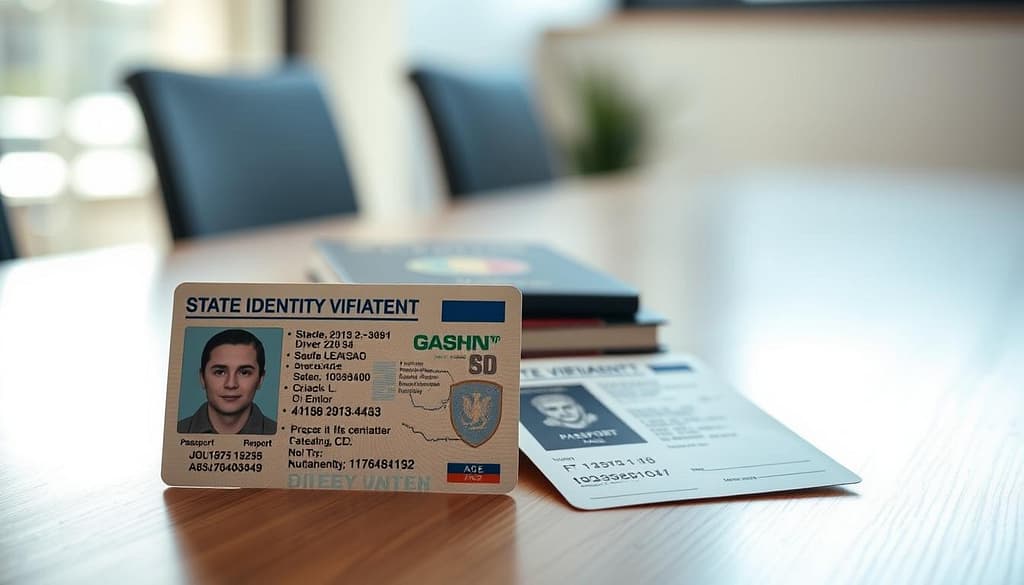
Then comes the test of where you live. States want proof you plan to stay. This is tough for digital nomads and remote workers. Your ID might say one place, but your work laptop another.
The documents needed are like a puzzle. You need at least two to prove who you are:
- A state-issued driver’s license or ID card (the gold standard)
- Utility bills showing your name and address (proof you pay to exist somewhere)
- Bank statements or voter registration (financial and civic commitment)
- Property tax records or lease agreements (physical stake in the territory)
When you visit a sportsbook or casino, things get real. Your face and signature are checked. It’s like a handshake in today’s world.
This is the ultimate test of where you live. You can’t fake being somewhere you’re not. This is called the “geographic truth” moment.
Geofencing is the tech that helps. It uses GPS and Wi-Fi to keep you in line. Try to bet from the wrong place? You’ll be stopped.
These systems show how modern rules work. Your identity is checked in three ways: documents, physical presence, and location data. States need all three to be sure of you.
Failure here is a big deal. It’s like a risk that could ruin everything. States check these things to make sure betting is safe.
So, when you upload documents or visit a cage, remember. You’re not just proving age or location. You’re part of a big test of trust. The state wants to know if you’re telling the truth.
Retail Partner Perks: In-person deposits/withdrawals
In today’s world, you can get a lot with just a tap on your phone. Yet, the option to use cash at a 7-Eleven for betting is popular. It shows that for many, trust comes from a handshake, not just a digital sign.
Experts call this “reducing information asymmetry.” I see it as the “see-it-to-believe-it” principle. Digital transactions can feel like money disappearing. But, using a casino cage or a local store makes it feel real and safe.
So, where do these odd mixtures of retail and finance exist? The answer varies by state, influenced by state rules banking. Here’s a look at where you can bank while you shop:
| State/Region | Retail Partner Type | Key Perk & Consideration |
|---|---|---|
| Pennsylvania | Casino Cage (at physical sportsbook) | The classic model. Maximum cash at cage availability for instant deposits and withdrawals. It’s the fortress of trust, but you must travel to it. |
| Colorado, New Jersey | Partnered Convenience Stores (e.g., PayNearMe) | Turn cash into digital credit at a neighborhood store. Perfect for maintaining privacy or for those avoiding traditional banks. Fees may apply. |
| Michigan | Online-Only Operators with Retail Partners | Some apps partner with retail chains for cash deposits only. Withdrawals are typically electronic, creating a one-way physical street. |
| Various Tribal Nations | On-Reservation Retail & Casino Locations | The ultimate integration. The partner isn’t just a point of sale; it’s part of the community’s economic fabric, blending commerce and gaming seamlessly. |
This network is powerful because it operates outside pure digital logic. While geofencing controls where you can tap your phone, a retail partner defines how you interact with money. It appeals to those who prefer cash or find comfort in a receipt.
The cash at cage availability is fascinating. It’s not just a way to withdraw money; it’s a psychological release. Winning feels more real when you can take cash home. This physical finale can encourage different behavior than an anonymous ACH transfer.
These partnerships are the hidden infrastructure of American gaming finance. They show that for all our tech, we value tangible touchpoints. The next time you see a “Deposit Cash Here” sign, remember—it’s not a loophole. It’s a clever, human bridge.
Province Notes for Canada (Where Applicable)
The OCC’s safety and soundness rules apply beyond U.S. borders. In Canada, things work differently. For those near the border, it’s key to understand this difference. Our analysis of state rules banking has a Canadian parallel, with provinces playing a big role.
Canada’s banking system is not one-size-fits-all. Each province has its own rules, making the U.S. system seem simple by comparison. People’s money moves towards stability, but the rules vary by province.
In the U.S., states and credit card companies often clash. In Canada, provinces have stricter rules. For example, credit card restrictions on online gambling are more common. Interac e-Transfer is the preferred method, unlike the U.S.’s mix of cards and transfers.
Geofencing in Canada is strict. They enforce it well, with harsh penalties for using VPNs. Your location is not just a suggestion; it’s a strict rule.
So, what are the key provincial differences? Think of this as your pre-trip diplomatic briefing.
| Province | Credit Card Use for Gaming | Geofencing & Residency Focus | Key Regulatory Quirk |
|---|---|---|---|
| Ontario | Highly restricted. Operators in the regulated market (iGaming Ontario) largely prohibit credit cards for deposits, pushing users to Interac. | Extremely strict. Requires precise location and residency verification within Ontario. A VPN will get you caught and banned. | The only province with a fully open, competitive commercial online model (like many U.S. states). All others use a provincial monopoly or tight partnership system. |
| British Columbia | PlayNow.com (BCLC’s site) does not accept credit cards. Debit/Interac only. | You must be physically in B.C. Their geofencing technology is notoriously precise. | Operates under a single provincial crown corporation (BCLC). No private competitors. This is stability, but without choice. |
| Alberta | Similar restrictions apply through the Alberta Gaming, Liquor & Cannabis Commission (AGLC) site. Credit cards are a no-go. | Must be in Alberta. The system is designed to lock out cross-border traffic from Saskatchewan or B.C. seamlessly. | Uses a hybrid model. The AGLC runs the site but partners with a private operator for the platform. It’s a controlled experiment. |
| Quebec | Loto-Québec’s Espacejeux follows the national trend: no credit cards for deposits. | Requires Quebec residency. The francophone focus adds an extra layer of cultural and logistical separation. | The most culturally distinct system. Heavily promotes its own lottery products alongside casino games, reflecting provincial priorities. |
The table shows a key point. While the U.S. debates credit card access, Canada has largely decided. The consistency in credit card restrictions is striking. The real difference is in the model of operation—open market, monopoly, or hybrid.
For Americans or those living near the border, remember: your U.S. financial habits don’t apply here. The quest for stability leads to Interac and strict provincial rules. It’s a different system, requiring a different approach.
Tax Snapshots: State Withholding Basics (High Level)
Remember when states had a lot of money after the pandemic? Now, your money might help them pay their bills. The good times are over, and the hangover has started.
State tax withholding is more than just math. It’s a way for governments to manage money and influence people’s choices. When states have less money, they might take more from your paycheck.

States that had extra money now have to tighten their budgets. They adjust their state rules banking and withholding to make ends meet. Some take a lot upfront, while others are more relaxed.
This creates a mix of rules across the country. Withholding states and non-withholding states show how well a state is doing financially. It’s like checking a state’s blood pressure.
When you withdraw cash, it can trigger taxes differently than online transfers. Old tax laws meet new money flows. The cage becomes a key spot for collecting data.
States looking for more money might focus on cash withdrawals. These are easy to track. Online transfers are harder to follow. This affects their rules and state rules banking.
This isn’t about income tax. It’s about withholding on winnings or big transactions. The rules vary a lot. Some states start withholding at $600, while others wait until $5,000. There’s no one-size-fits-all approach.
States with confidence might withhold less. States in trouble might take more upfront. Your gambling can help their budget.
This affects how players plan their finances. Cash at cage availability in high-withholding states needs careful planning. Online withdrawals in low-withholding places offer different benefits. It’s like navigating a financial map.
Let me break down the high-level landscape:
- Aggressive Withholders: States facing budget “normalization” often lead this category. They need cash now, not later.
- Moderate Approaches: These states balance revenue needs with competitive concerns. They don’t want to drive activity elsewhere.
- Minimalists: Either philosophically opposed or financially comfortable enough to wait for annual filings.
The link between physical places and tax policy is interesting. States with good cash at cage availability often have better withholding rules. These systems grew together.
On the other hand, digital-first states might be slower to update their policies. Their state rules banking focus is online. This creates differences that smart players can use.
Here’s the main point: your state’s budget worries affect your money. The withholding rate shows what the government is thinking. The good times are over, and now it’s time to pay the price.
Watch for changes in state rules banking as budgets get tighter. Withholding rates might go up. Reporting rules could get stricter. The cage might become even more key for following the rules.
This isn’t just about taxes. It’s about how governments use psychology to manage money. The government that takes a lot shows its needs. The one that doesn’t shows confidence. Your betting is caught in the middle.
Next time you see a withholding percentage, think about it. It’s like reading your state’s financial diary. That number shows the state’s financial struggles, political desires, and economic outlook. Cash at cage availability is just how they share this financial story.
How to Verify an Operator’s License
Checking an operator’s license is more than just a formality. It’s like doing a forensic check to protect yourself. That seal on a betting site should mean more than just a good grade.
The OCC and FDIC say a financial practice is trustworthy if it doesn’t harm anyone financially. Anything that could cause harm is considered risky. You need to make sure your chosen operator is safe.
So, how do you go beyond just seeing a license number on a website? You become a detective.
Step one: Find the official source. Every state gaming commission has a public database. Don’t trust what the operator says. Go to the regulator’s website and use their search tool.
Step two: Read between the digital lines. A valid license should tell you more than just a number. Look for:
- The exact legal entity name (does it match the site you’re on?)
- License status (active, suspended, pending)
- Issue and expiration dates
- Any specific restrictions or endorsements listed
Step three: Hunt for the scarlet letters. These are enforcement actions—fines, warnings, or suspensions. They’re like a financial rap sheet. You want a clean record.
Now, it gets interesting. Sometimes, restrictions are actually good signs. For example, credit card restrictions show a state is careful with money.
This careful approach is to protect you and the financial system. It’s a sign of a well-regulated environment. It’s not a bad thing.
Think of it like this: a casino that checks all payments is safer than one that doesn’t. It’s like a bar that checks IDs.
The verification process shows if a state is serious about banking rules. A strong regulatory framework has clear records and controls. A weak one is less careful.
When you verify properly, you’re not just checking if it’s legal. You’re checking if the operator is serious about following rules. You’re looking for evidence they treat their license as a big responsibility.
This detective work is worth it. It makes you more than just a consumer. You become an informed participant. You see credit card restrictions as safety measures, not just rules.
A license is a promise. Your job is to check if the promisor is trustworthy and well-regulated.
Quick Links to State Regulators and Self-Exclusion
Knowing the rules is key in online betting. Direct access to rule-makers gives you power. You’ve learned about state rules banking and credit card restrictions. Now, meet the people who make the rules.
Remember, regulators keep things fair. They make sure betting is safe and fair. Your local gambling commission does this by granting licenses and setting rules.
Here’s your direct link to the source. This table is your guide to regulatory bodies.
| State | Regulatory Body | Primary Website | Key Notes |
|---|---|---|---|
| New York | New York State Gaming Commission | gaming.ny.gov | Oversees commercial casinos, sports betting, and tribal gaming |
| New Jersey | New Jersey Division of Gaming Enforcement | nj.gov/lps/ge | One of the oldest and most established regulatory frameworks |
| Pennsylvania | Pennsylvania Gaming Control Board | gamingcontrolboard.pa.gov | Regulates both online and retail sportsbooks comprehensively |
| Michigan | Michigan Gaming Control Board | michigan.gov/mgcb | Manages commercial, tribal, and online gaming operations |
| Illinois | Illinois Gaming Board | igb.illinois.gov | Oversight includes video gaming, casinos, and sports betting |
Bookmark your state’s page. It helps when deposits or withdrawals don’t go through. It’s easy to check if the operator is following the rules.
Now, let’s talk about self-exclusion. It’s not about losing control. It’s about exerting control.
Self-exclusion is like a personal circuit breaker. It prevents harm to you, just like regulators protect banks. It’s a state-approved way to block access to betting sites.
How does it work? You sign up with your state’s program. Once in, betting sites must block your access. They can’t take your bets or return your deposits. It’s a strong agreement between you and the state.
This is a social contract. You use the state’s power to set your own limits. Self-exclusion is the same everywhere in a state, no matter the payment method.
Different states have different programs. Some last a year, others five years or forever. Some allow you to come back after a time and counseling. It’s all centralized, so one form covers everything.
Knowing about state rules banking is important. But knowing about self-exclusion is even more powerful. It’s not just following rules; it’s setting your own. The regulator becomes your ally in setting limits.
So, yes, learn about deposit methods and geolocation tech. But also know where the real power lies. Your state regulator’s website is your direct link to the rulebook. And self-exclusion is not defeat; it’s you making your own rule.
Travel Day Checklist for Betting Access
Think of this as your pre-flight ritual for financial mobility. You’re a modern nomad, crossing invisible lines that change the rules of the game. Before you hit the road, run down this list. It transforms our analytical digging into a navigable map.
First, verify the operator. Is your preferred book, like DraftKings or FanDuel, legally licensed in your destination? A quick check with the state regulator saves future headaches. Next, understand the local flavor of state rules banking. Is it a digital-only zone or does it offer cash at cage availability? Nevada and Pennsylvania welcome in-person transactions, while others demand purely electronic moves.
Now, plot your course with geofencing in mind. Signal dead zones near borders can lock you out. Don’t let a bridge or a tunnel become a financial wall. Have your ID ready—residency and age checks are non-negotiable. Know the tax withholding basics for that state, too. A surprise deduction is a sour victory.
This checklist isn’t just about compliance. It’s about applying the sage’s knowledge to your journey. It ensures your access doesn’t vanish when the landscape changes. Your next trip can be financially seamless. The confusing patchwork of regulations becomes a system you can master. Pack this knowledge alongside your suitcase.