Ever feel like academic publishing is like trying to assemble IKEA furniture without instructions? Welcome to the jungle, baby.
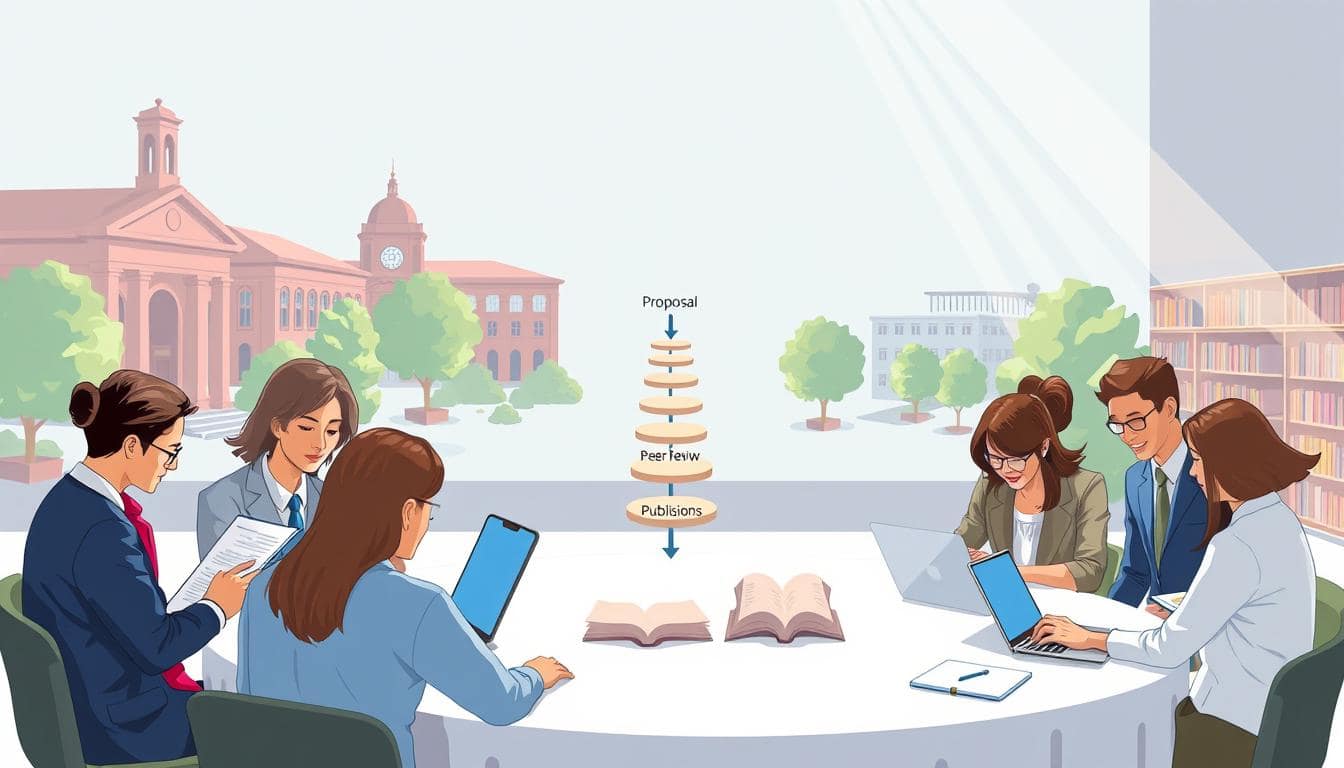
We’re mapping the entire proposal to publication journey with precision and wit. Think of this as your GPS through the scholarly publication wilderness.
We’re using insights from Think. Check. Submit. and Taylor & Francis to guide you. We’re breaking down how to turn raw research into a polished publication.
Let’s be real: if Dante were writing today, he’d have a circle of hell for manuscript formatting. We’re here to ensure you avoid that particular circle of hell.
Initial Preparation and Pre-Submission
Your book proposal is like a first date resume. It’s not just about showing your credentials. It’s about selling a vision. This early stage helps tell apart serious scholars from casual writers in the academic publishing lifecycle.
Taylor & Francis works like a think tank, not a gatekeeper. Their support system acts as a developmental editor before you even submit. They look for proposals that don’t just answer questions but also ask better ones.
UoL Press, on the other hand, reviews manuscripts with the same intensity as a thesis defense. Their evaluation is like a literary obstacle course:
| Assessment Criteria | Taylor & Francis | UoL Press |
|---|---|---|
| Originality Threshold | Market-redefining ideas | Field-advancing research |
| Review Process | Collaborative development | Blind peer review |
| AI Disclosure | Required with specifics | Mandatory full transparency |
AI has become so important that it needs its own byline. Ethical disclosure is no longer just a virtue. It’s essential for survival in the scholarly publication world.
The journey from proposal to press starts with a harsh truth. Publishers aren’t searching for just good ideas. They’re looking for ideas that will make their imprint essential for the next decade.
Handling Submission and Peer Review
Welcome to the peer review process, the academic world’s version of speed dating. Here, your brilliant proposal faces harsh reality. The proposal to publication journey hits its most critical phase, where your work is scrutinized by experts.
UoL Press uses a single anonymized review system. It’s like academic blind dating – reviewers know you, but you don’t know them. This system prevents bias while keeping things fair. Your work is reviewed by at least two experts who examine it closely.
The three-month feedback window feels like an eternity. Most reviews take even longer because academics are busy. They juggle reviewing with teaching, research, and enjoying their book compensation.
Reviewers get paid in books, not cash. It’s a way to say “thanks” that might not be as appreciated. It’s like getting paid in exposure, but with a ISBN number.
Conflict of interest declarations keep things fair. They ensure reviewers aren’t judging their department chair’s work or their academic rival’s research. It keeps the system honest, even in a specialized field.
| Review Stage | Timeframe | Participant | Compensation |
|---|---|---|---|
| Initial Submission | 1-2 weeks | Author | Anxiety |
| Reviewer Assignment | 2-4 weeks | Editor | Salary |
| Peer Review | 8-12 weeks | Reviewers | Academic books |
| Decision Process | 2-3 weeks | Editorial Board | Power |
This phase separates great research from just okay work. The academic publishing lifecycle needs this scrutiny to keep quality high in a crowded field.
Remember, negative reviews aren’t personal attacks. They’re a way to strengthen your work. The proposal to press journey requires thick skin and flexibility.
Peer review turns your manuscript into something worth publishing. It’s painful, frustrating, but essential – like democracy itself.
Navigating Revisions and Copyediting
Imagine a Michelin-star chef getting feedback from food critics. Your masterpiece is dissected by experts who missed your brilliant intentions. This phase separates aspiring academics from publishing pros.
The UoL Press revision process shows how scholarly publication turns raw research into polished work. They balance strict standards with author support, creating a true partnership.
Crafting your author response needs diplomatic skills like a UN ambassador. You must acknowledge valid concerns while defending your methodological choices. The key is to show you’ve seriously considered each point, even when sticking to your original position.
Successful revision strategies include:
- Addressing every reviewer comment systematically
- Providing clear rationale for rejected suggestions
- Highlighting specific changes in your response letter
- Maintaining your unique scholarly voice throughout revisions
Multiple review rounds are sometimes needed, like film directors facing test audience feedback. The editorial team works together to ensure consistency while preserving your work’s integrity. This delicate dance turns good manuscripts into exceptional publications.
The academic publishing lifecycle reaches a critical point here. How you handle revisions determines if your work is published or stays in limbo. It’s where the proposal to press journey either gains momentum or hits obstacles.
Copyediting is the final polish before publication. It’s less substantive than peer review revisions but ensures consistency in formatting, citations, and language. Think of it as the quality control that separates professional publications from amateur work.
Remember: Even Shakespeare probably had an editor suggesting “to be or not to be” might be a tad dramatic. The goal isn’t to eliminate your voice but to enhance its clarity and impact within the academic conversation.
Proofs and Final Approval
Welcome to the final stage of turning your manuscript into a scholarly publication. It’s like a red-carpet premiere, but with less glamour and more stress about Oxford commas.
The UoL Press Publishing Committee acts like a Supreme Court for your work. They check if your research meets high standards. Think of them as helpful gatekeepers, not obstacles.

This is your last chance to fix any mistakes before your work is forever online. They check everything, from how you cite sources to if your facts are right. Even small errors can be tricky to fix in the academic publishing lifecycle.
Big mistakes, on the other hand, can lead to correction notices. These notices follow your work, like academic scarlet letters. The publishing world is precise but also practical.
| Error Type | Correction Process | Timeline Impact | Professional Consequence |
|---|---|---|---|
| Minor Typographical | Often retained unless egregious | Minimal delay | Negligible professional impact |
| Factual Inaccuracy | Mandatory correction notice | 2-3 week delay | Moderate professional impact |
| Ethical Concern | Publication halt pending review | Indefinite delay | Significant professional impact |
| Copyright Issue | Immediate content removal | Complete restart | Major professional impact |
Proofreading is like taking a final exam. Get it right, and you can sleep well. Get it wrong, and you’ll remember that mistake for years. Most journals give you 48-72 hours to make corrections.
The copyediting approval process is all about finding a balance. We all want perfect publications, but sometimes “good enough” is okay. The key is knowing what errors really matter.
Getting your manuscript approved is like crossing the finish line of an academic marathon. When your department chair says “Looks good to me,” it’s a big win.
This quality control step makes sure your research is ready for the world. It’s the last hurdle before your work is shared with others. No pressure, but it’s a big deal.
Contract Considerations
This is where your proposal to press journey turns into a real deal—the moment dreams meet legal papers. Welcome to the contract phase of the academic publishing lifecycle. It’s where excitement and legal terms have a weird dance.
At UoL Press, the contract process is like a ballet with lawyers. They’ve made it efficient, avoiding chaos. The first offer comes in weeks, filled with many clauses.
Authorship is taken seriously here. UoL Press checks who contributed to your work. They make sure every author actually helped, or they’ll notice.
The AI disclosure rules are like listing ingredients in food. UoL Press wants to know if AI tools helped your research. They’re not against AI, just want to know what’s in the mix.
For open access publications, copyright and licensing get interesting. You decide if your work is free or locked behind paywalls. Choosing a Creative Commons license can spread your research far or keep it limited.
Knowing about licensing options shows you’re serious. Talking about subsidiary rights over coffee is a sign of expertise.
| License Type | Allows Commercial Use | Allows Modifications | Ideal For |
|---|---|---|---|
| CC BY | Yes | Yes | Maximum dissemination |
| CC BY-SA | Yes | Yes (must share alike) | Building on existing work |
| CC BY-NC | No | Yes | Non-commercial research |
| CC BY-ND | Yes | No | Protecting original content |
| CC BY-NC-SA | No | Yes (must share alike) | Educational materials |
| CC BY-NC-ND | No | No | Most restrictive protection |
Each license choice shows a different view on scholarly publication. CC BY is like open borders for your work. CC BY-NC-ND is like read-only mode.
The fine print in contracts is very important. Clauses about subsidiary rights can affect how your work is used. It could be translated, anthologized, or adapted for other media.
UoL Press usually lets authors keep copyright while giving them exclusive rights. This way, you own your work but it’s published through their channels. For open access works, they need specific Creative Commons licenses.
Contract negotiations are about understanding the big picture. A small clause can affect how your work is used in the future. The digital rights section is key for how your research is seen years later.
This phase turns your proposal into a published work—the last step before your ideas are shared. It’s where excitement meets responsibility, and creativity meets practicality.
Promotion and Dissemination
You’ve made it through peer review and revisions. Now, it’s time to share your work with the world. This is like walking naked in Times Square – it’s bold.
Many scholars dread promoting their work. But, publishers help a lot. They turn shy authors into confident ones.

The UoL Press open access model offers great chances to share your work. It goes global fast, but you must think about permissions. This can be a headache.
Digital identity is key in today’s research world. ORCID iDs are like digital shadows that follow you. They show you’re serious about your research.
Now, books come with more than just words. They include datasets and code. This makes your work a full digital package, whether you planned it or not.
| Promotion Method | Traditional Publishing | Open Access Approach | Researcher Involvement |
|---|---|---|---|
| Marketing Campaigns | Publisher-driven | Institution-supported | Low to moderate |
| Global Distribution | 6-12 month rollout | Instant worldwide access | Minimal |
| Supplementary Materials | Limited hosting | Comprehensive data sharing | High preparation needed |
| Digital Identity | Optional ORCID integration | Mandatory persistent identifiers | Initial setup required |
This is the last step from proposal to press. Your hard work is ready for the world. It’s time to see if it gets noticed.
The best way to promote is to mix publisher help with your own effort. Share your work and talk about it. Remember, even important research needs someone to read it.
Post-Publication Impact
Your publication date is just the beginning. It’s the start of your work’s long journey. While you celebrate, your scholarly publication faces its biggest test. It must earn citations and prove its worth.
UoL Press knows this well. They handle errors with care, from small typos to big mistakes. They aim for transparency and respect, like Victorian manners.
Here’s how they manage the proposal to press journey:
- Minor corrections: Fixed in 30 days with little trouble
- Substantial errors: Need formal notices and corrections
- Retractions: Used for serious issues like ethics or findings that can’t be verified
Why are they so careful? The academic publishing lifecycle goes on for years. One small mistake can damage your reputation quickly.
UoL Press follows strict ethical guidelines. They’re not just following rules; it’s part of who they are. When mistakes happen, they choose to be open, not secretive.
This isn’t just about fixing errors. It’s about leaving a lasting mark. Your work’s impact is shaped by how you handle mistakes, not just your successes.
The post-publication phase is key. It shows if your work will last or fade. In academia, it’s not about being flawless. It’s about being accountable when you’re not.
Conclusion
Our journey from proposal to publication ends with valuable lessons and scars. We’ve made it through the academic publishing world, facing challenges and coming out with a contribution to knowledge.
The process of publishing in academia is like an extreme sport. It’s both thrilling and tiring. We’ve seen how systems like Taylor & Francis and University of London Press turn research into useful knowledge.
Ethical publishing is key to keeping academic work honest. With AI and open access changing things, our goal remains the same. We aim to share knowledge and avoid plagiarism.
The path from proposal to publication keeps changing, but it’s always worth it. The real victory isn’t just getting published. It’s about adding to the ongoing conversation. So, go ahead and publish, but don’t forget to rest.